× Close

Our History

From Program to National Center

NCHEMS began in 1969 as the Management Information Systems program at the Western Interstate Commission for Higher Education (WICHE). In 1977, NCHEMS parted with WICHE and became its own independent 501(c)(3) non-profit organization with a mission to improve strategic decision-making in postsecondary education for states, systems, institutions, and workforce development organizations in the United States and abroad.

Turning Data into Strategy for Over Half a Century

NCHEMS’s rich history has provided over 50 years of contextual knowledge and expertise that we draw upon as we work to innovate and evolve the field of higher education.

If you want to dig deeper into NCHEMS, read more of our eventful history here.

Foundations: Building a Shared Language for Higher Education

1960s-1970s

NCHEMS began in the late 1960s with a simple but transformative insight: higher education couldn’t make good decisions without shared information. At the time, colleges and state agencies across the West were all building their own management information systems—costly, duplicative, and inconsistent. Leaders at the Western Interstate Commission for Higher Education (WICHE) recognized the problem and secured federal support to develop standardized tools states and institutions could use to define, report, and analyze their data.

Through the WICHE Management Information Systems (MIS) program, NCHEMS’ early architects created what became the first consistent vocabulary for higher-education data: the Data Element Dictionary, Program Classification Structure, The Higher Education Finance Manual, the Facilities Inventory and Classification Manual, and Resource Requirements Prediction Model. As these tools spread, the demand grew beyond the West. Hundreds of institutions nationwide adopted NCHEMS’ standards, and by 1971, the program evolved into a national center housed at WICHE: the National Center for Higher Education Management Systems, or NCHEMS.

Throughout the 1970s, NCHEMS created the foundational data standards and analytical tools that continue to shape higher education today. This includes developing comprehensible data manuals, including standards for finance, personnel, facilities, instructional programs, and cost analysis, which became the basis for today’s IPEDS federal reporting system. Even today, IPEDS continues to be used by every U.S. college and university for reporting. These resources, coupled with early analytical models like student-flow systems and cost-finding methodologies, gave colleges and states the tools to understand themselves with new clarity.

In 1977, NCHEMS transitioned from WICHE to become an independent 501(c)(3) nonprofit, carrying forward a mission to support decision-making and planning in higher education across the country.

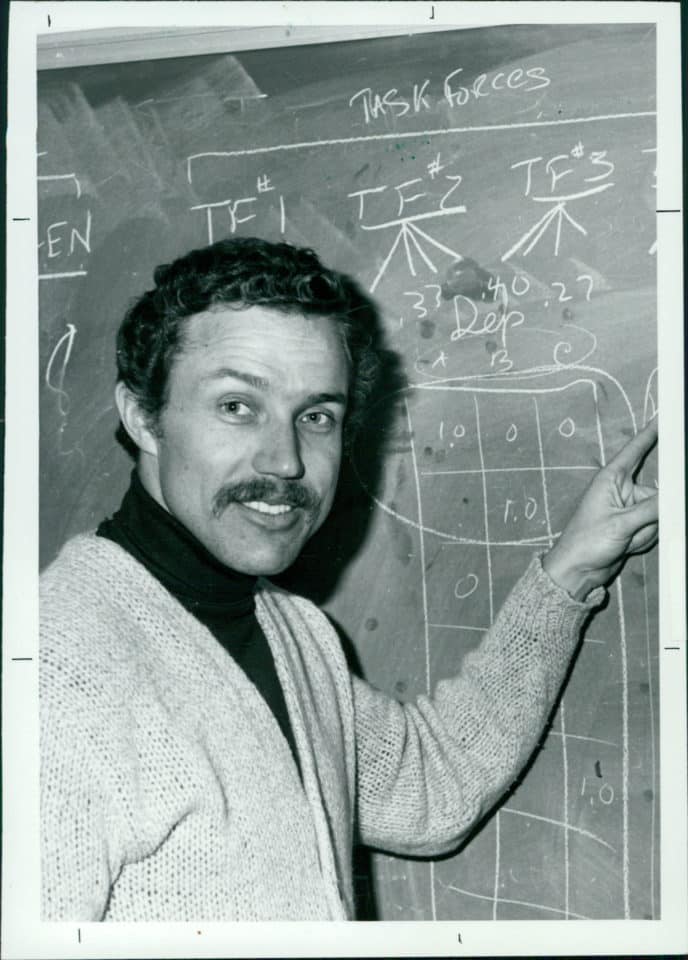
Black and white photo of NCHEMS staff member Wayne Kirshling, a man with short curly dark hair and a mustache, wearing a cardigan over a black turtleneck, in front of a chalkboard with tables and numbers on it.

NCHEMS staff member Wayne Kirschling.


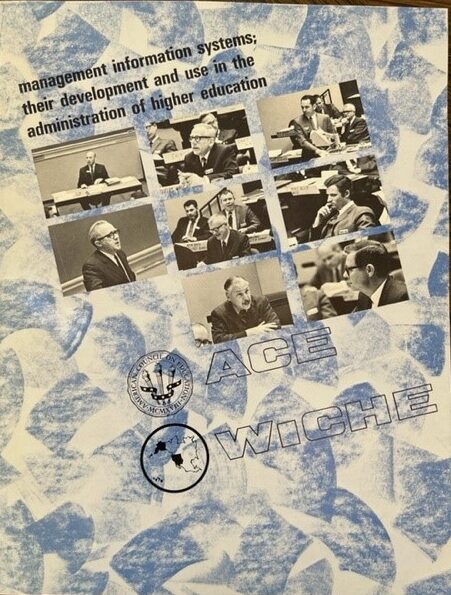
Copy of a newsletter-type page with several black and white photos from men working in an office and in discussions. The text reads, "management information systems; their development and use in the administration of higher education." Below the photos are stamps/logos for "ACE" and "WICHE."

MIS at WICHE

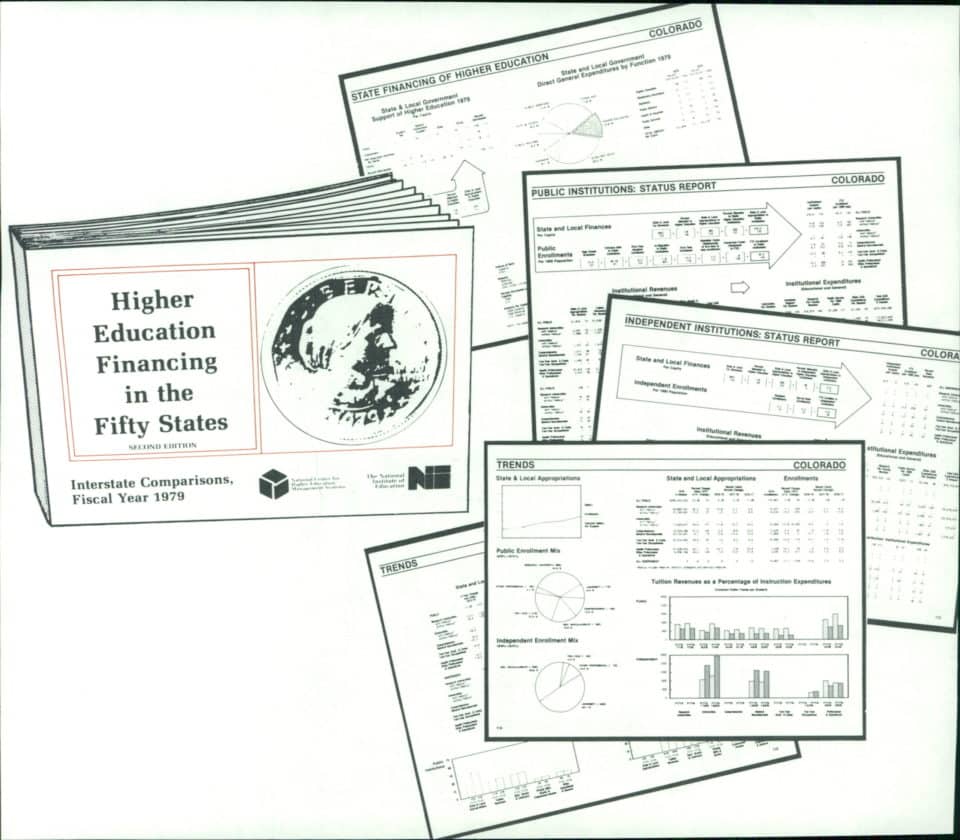
Photo of NCHEMS resource of comparative financial data for each of the fifty states.

NCHEMS resource comparing financial data for each of the fifty states.

From Raw Data to Actionable Information

1980s

The 1980s marked a shift from defining data to interpreting it. NCHEMS moved beyond asking “What should be collected?” and focused instead on “How should leaders use information to make better decisions?”

A major W.K. Kellogg Foundation grant launched NCHEMS into the forefront of student learning assessment. Under the leadership of Peter Ewell, this study illustrated how systematically collected outcomes information, when used intentionally, can enhance institutional planning and performance. NCHEMS quickly became a national authority on assessment, accountability, and the translation of data into action.

Photo of Dennis Jones, an older man with short white hair on the sides, with balding on top of his head, wearing a black suit jacket and blue dress shirt.

Dennis Jones, President Emeritus

The decade also brought organizational change. After NCHEMS’ designation as a federally funded center ended in 1985, the organization reinvented itself. Dennis Jones became president and steered NCHEMS into an entrepreneurial, technical assistance firm that used its on-the-ground experiences to develop approaches to strategic decision-making. This shift sharpened the organization’s ability to respond to emerging state and institutional needs and laid the groundwork for NCHEMS’ future as a trusted problem-solving partner.

Critically, this era revealed a truth that continues to shape the organization today: public institutions rely on state policy to enable their improvement. That realization set the stage for NCHEMS’ deep engagement with state-level governance, finance, and policy.

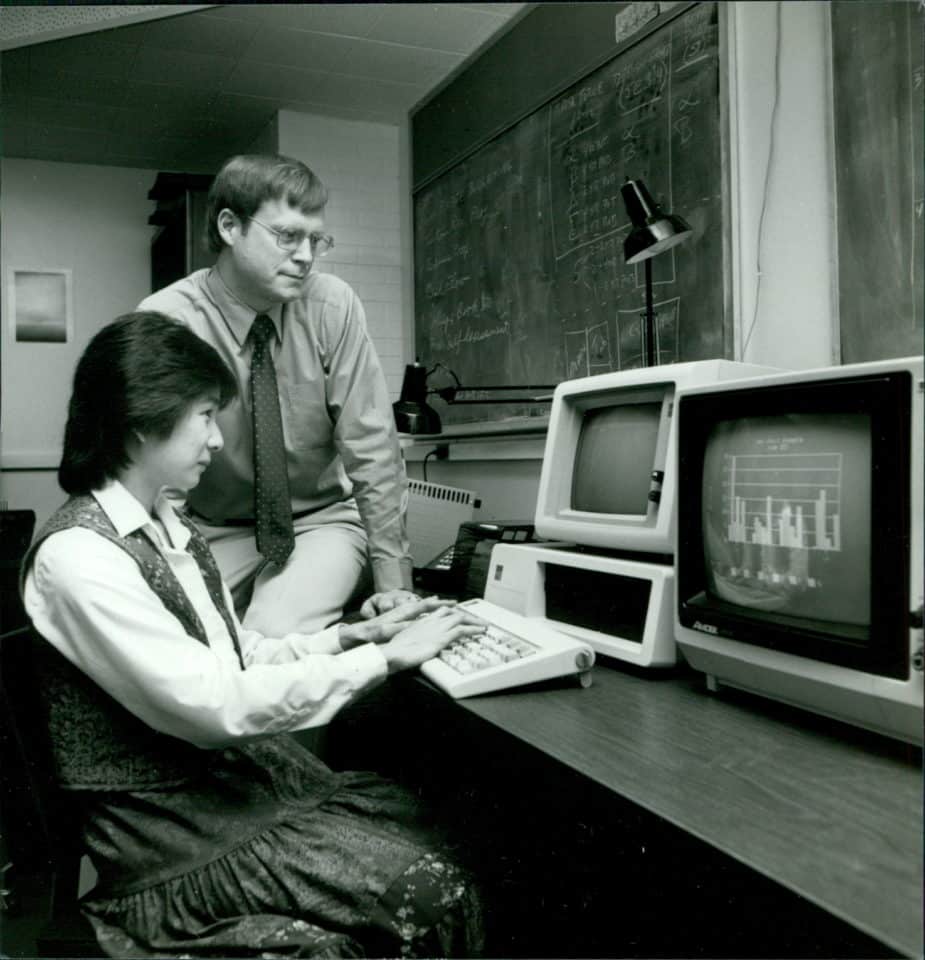
Black and white photo of two NCHEMS staff members, Paul Brinkman and Shelly Niwa, working at a computer in a room with chalkboards and other monitors around them.

NCHEMS staff members Paul Brinkman and Shelly Niwa.

Systems, Structures, and New Models

1990s

The 1990s brought rapid change and cemented NCHEMS’ role as a central architect to statewide higher education reform. Aims McGuinness’ contributions strengthened NCHEMS’ expertise in state governance, planning, and system design.

Engagement with State Postsecondary Review Entities (SPRE)

During the 1992 Reauthorization of the Higher Education Act, NCHEMS worked with a consortium of states to develop standards and processes for federally mandated State Postsecondary Review Entities. Although Congress repealed the SPRE requirement in 1995, NCHEMS’ work established its reputation for thoughtful, evidence-based approaches to institutional accountability.

Designing Western Governors University (WGU)

NCHEMS played a role in one of the decade’s most significant innovations: Western Governors University. Working closely with the Western Governors Association, Dennis Jones and Sally Johnstone developed the design document that transformed the idea of a “Western Virtual University” into a competency-based institution built around demonstrated learning rather than seat time. With the leadership of Peter Ewell, NCHEMS helped refine WGU’s mission, degree structure, and assessment methods and supported the university through its unprecedented joint accreditation by four regional accrediting agencies. This partnership set the stage for WGU’s rise as a national leader in competency-based education.

State Governance Reform

Guided by the principle “form follows function,” NCHEMS helped multiple states reorganize their higher-education systems to better serve public goals. Major efforts included:

  • Kentucky – establishing a comprehensive community and technical college system and restructuring statewide governance.
  • Louisiana – creating a unified community and technical college system.
  • West Virginia – overhauling governance to align mission and structure better.
  • North Dakota – supporting reforms that earned national recognition for innovation.

Advancing Assessment and International Engagement

NCHEMS continued shaping the assessment landscape. Peter Ewell chaired the design team for the National Survey of Student Engagement (NSSE), followed by the Community College Survey of Student Engagement (CCSSE), both of which reshaped how institutions measure student learning experiences.

Meanwhile, NCHEMS expanded internationally through engagements with the Organization for Economic Co-operation and Development (OECD) and the Center for Higher Education Policy Studies, helping countries develop new frameworks for governance and accountability following the fall of the Soviet Union.

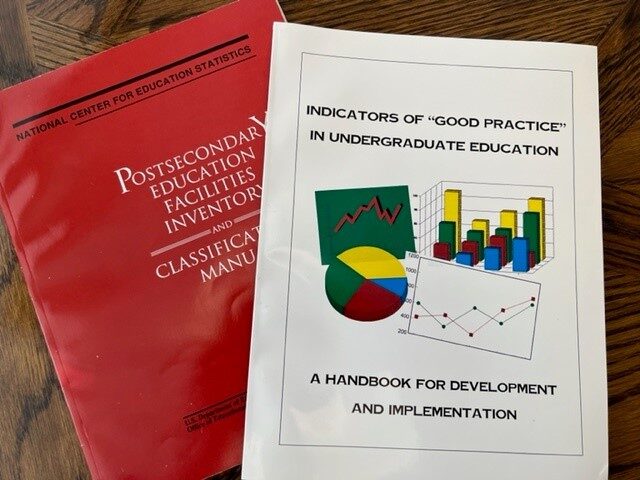
Photo of NCHEMS resources - two reports/publications titled "Indicators of 'Good Practice' in Undergraduate Education" and "Postsecondary Education Facilities Inventory and Classification Manual."

NCHEMS resources.

The Public Agenda Era

2000s

The 2000s brought a shift in the national conversation: higher education was increasingly viewed as a public investment. NCHEMS helped shape this era by providing data, strategy, and clarity.

NCHEMS served as the data engine and thought partner for Measuring Up, the nation’s first higher education report card, produced by the National Center for Public Policy and Higher Education. The reports redefined state accountability, evaluating access, affordability, and performance. This visibility accelerated the shift toward “public agendas,” or statewide plans that explicitly articulated the purposes of higher education.

NCHEMS worked with numerous states to develop public agendas and provided tools to support them, including models for: aligning finance systems with state goals, using performance data to drive accountability, understanding educational attainment needs, and designing performance-based funding systems. The organization became a national leader in helping states design funding policies that tied resources to outcomes rather than inputs.

NCHEMS also partnered with WICHE on the Changing Direction initiative, producing the influential “flow of funds” model that helped states better understand how money moves through higher education and how policy choices shape student outcomes.

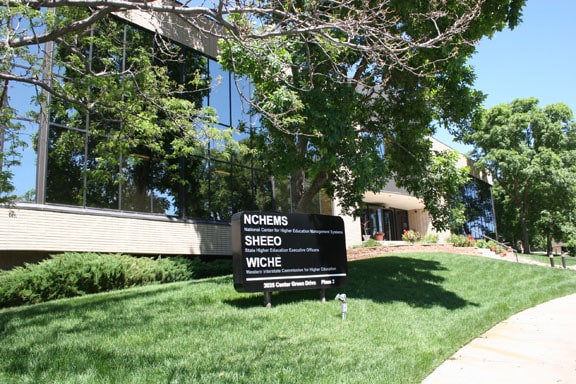
In 2005, NCHEMS joined WICHE and SHEEO to create the State Higher Education Policy Center in Boulder — a shared building that fostered collaboration among three of the nation’s core higher-education policy organizations. The founding of SHEPC cemented Boulder, Colorado, as a national hub for state higher education policy.

Photo of the State Higher Education Policy Center, a office building with several outward facing windows and trees around it with a sign in front with three organizations listed: NCHEMS, SHEEO, WICHE.

The State Higher Education Policy Center (SHEPC).

Navigating Disruption and Reimagining Delivery

2010s

Following the Great Recession, higher education was challenged to adapt to demographic decline, financial strain, and rapid technological change. NCHEMS helped states and institutions navigate uncertainty while staying committed to the public purpose of higher education.

Leadership Transition

Photo of Sally Johnstone, an older woman with short salt-and-pepper colored curly hair, wearing a black blazer with a yellow/gold flower broach, over a tan blouse and multi-colored scarf, smiling.

Sally Johnstone, President Emerita

In 2016, the NCHEMS Board conducted its first national presidential search, selecting Sally Johnstone, Ph.D., as the organization’s president. She modernized operations, strengthened the Board’s governance role, and provided continuity through major disruption. She led NCHEMS through the COVID-19 pandemic while maintaining stability and focus.

Johnstone also deepened NCHEMS’ work in equity and student success through providing support for the Foundation for Student Success and adapting major state initiatives to the new economic and demographic realities.

Quality, Data, and Student Success

NCHEMS collaborated with accreditors to establish standards for distance education delivery, responded to the rise of massive open online courses, or MOOCs, and online learning. NCHEMS also continued providing national data infrastructure, including creating the Aspen Prize for Community College Excellence statistical model and serving as the data engine for Lumina Foundation’s Stronger Nation annual report.

During this time, NCHEMS staffed and housed the Foundation for Student Success (FSS), which helped institutions improve equity outcomes through campus culture change. A grant from the National Science Foundation supported FSS in the development of tools for campus leaders to reduce graduation gaps for Hispanic students in STEM programs.

Designing Calbright College

In 2018, NCHEMS was asked to help California design a new institution focused on adults working in roles threatened by automation. NCHEMS analyzed the target student population, identified needed programs, and helped shape the competency-based model that became Calbright College.

State System Transformations

NCHEMS supported major system redesigns in Pennsylvania, Connecticut, and Hawai‘i, helping states clarify missions, evaluate structures, and realign institutions to better serve statewide goals.
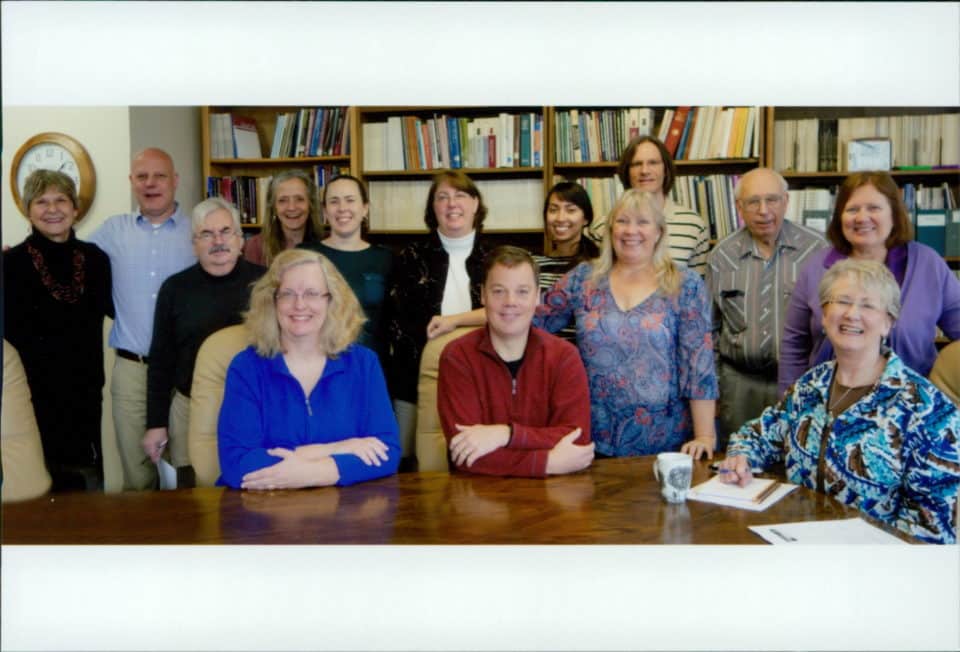
Photo of NCHEMS staff in a conference room. Front row: Linda Leyba, Brian Prescott, Cindy Wand, Sally Johnstone. Back row: Clara Roberts, Patrick Kelly, Peter Ewell, Liz Weeks, Rachel Christeson, Marianne Boeke, Sarah Torres Lugo, Johnna Clark, Dennis Jones, Joni Budden

NCHEMS staff – Front row: Linda Leyba, Brian Prescott, Cindy Wand, Sally Johnstone. Back row: Clara Roberts, Patrick Kelly, Peter Ewell, Liz Weeks, Rachel Christeson, Marianne Boeke, Sarah Torres Lugo, Johnna Clark, Dennis Jones, Joni Budden.

Strategic Modernization and a New Era of Leadership

2020 and Beyond

The 2020s brought renewed urgency for states and systems facing demographic shifts, political tension, financial pressures, and rapid changes in educational delivery. NCHEMS continued to provide the analytic foundation and policy insight needed to respond.

Leadership Transitions

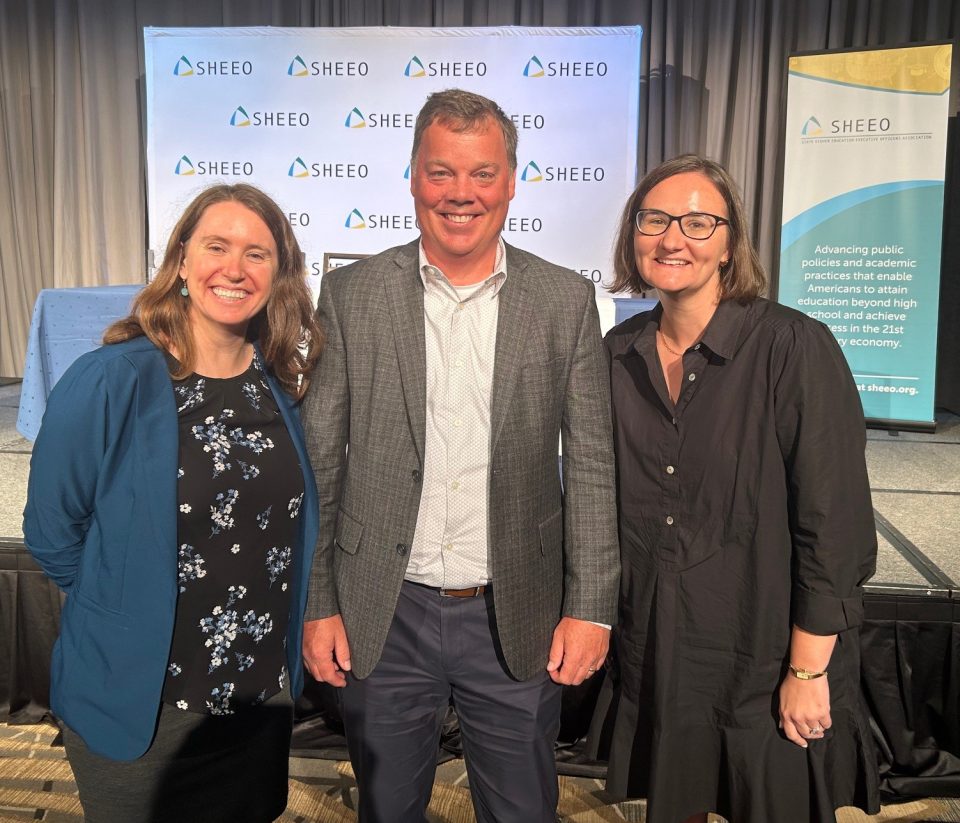
Photo of Louisa Hunkerstorm, Brian Prescott, and Sarah Pingel at SHEEO Policy Conference in front of stage with SHEEO backdrop.

Photo of Senior Associate Louisa Hunkerstorm, President Brian Prescott, and Vice President Sarah Pingel at SHEEO Policy Conference 2025.

In 2022, Brian Prescott, Ph.D., became NCHEMS’ president, and in 2023, Sarah Pingel, Ed.D., joined as vice president. The NCHEMS Board also welcomed several new members during this time. Under this new leadership, NCHEMS sharpened its strategic focus, strengthened its project portfolio, and supported a fully renewed Board of Directors.

Major Recent Initiatives

NCHEMS’ work reflects both its roots and forward-looking approaches to higher education. Some recent projects include:

As an exciting addition, NCHEMS released its inaugural annual report for fiscal year 2025 with insight into the impact of NCHEMS’ work. These initiatives reflect NCHEMS’ modern identity: a mission-driven team helping states and institutions make wise decisions in an increasingly complex landscape.

NCHEMS Today: A Commitment to Public Purpose

More than fifty years after its founding, NCHEMS remains grounded in the principles that shaped its earliest work. NCHEMS continues to use data to illuminate choices, design policy to serve public goals, and develop systems and structures around purpose. From its roots at WICHE to its present as a national leader in policy, finance, and data analytics, NCHEMS continues to live its mission: to effectively use evidence to improve strategic decision-making in postsecondary education.

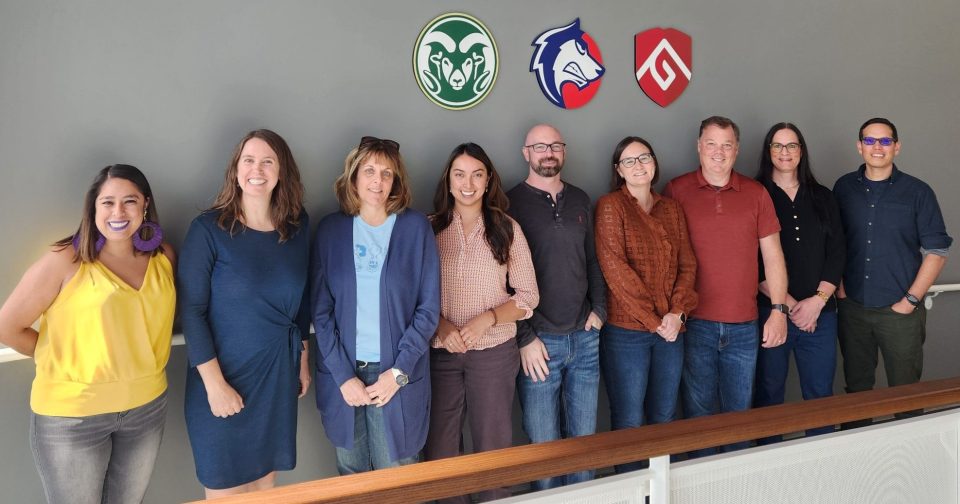
Photo of NCHEMS staff in front of a wall with a sign reading "CSU SPUR". The team (left to right) shows: Jacquelyn Villa, Louisa Hunkerstorm, Stacey Zis, Sarah Torres Lugo, Dan Armour, Sarah Pingel, Brian Prescott, Johnna Clark, and Artemio Cardenas.

NCHEMS staff retreat 2024. Left to right: Jacquelyn Villa, Louisa Hunkerstorm, Stacey Zis, Sarah Torres Lugo, Dan Armour, Sarah Pingel, Brian Prescott, Johnna Clark, Artemio Cardenas.

Contact us today to schedule a conversation.

Contact Us